
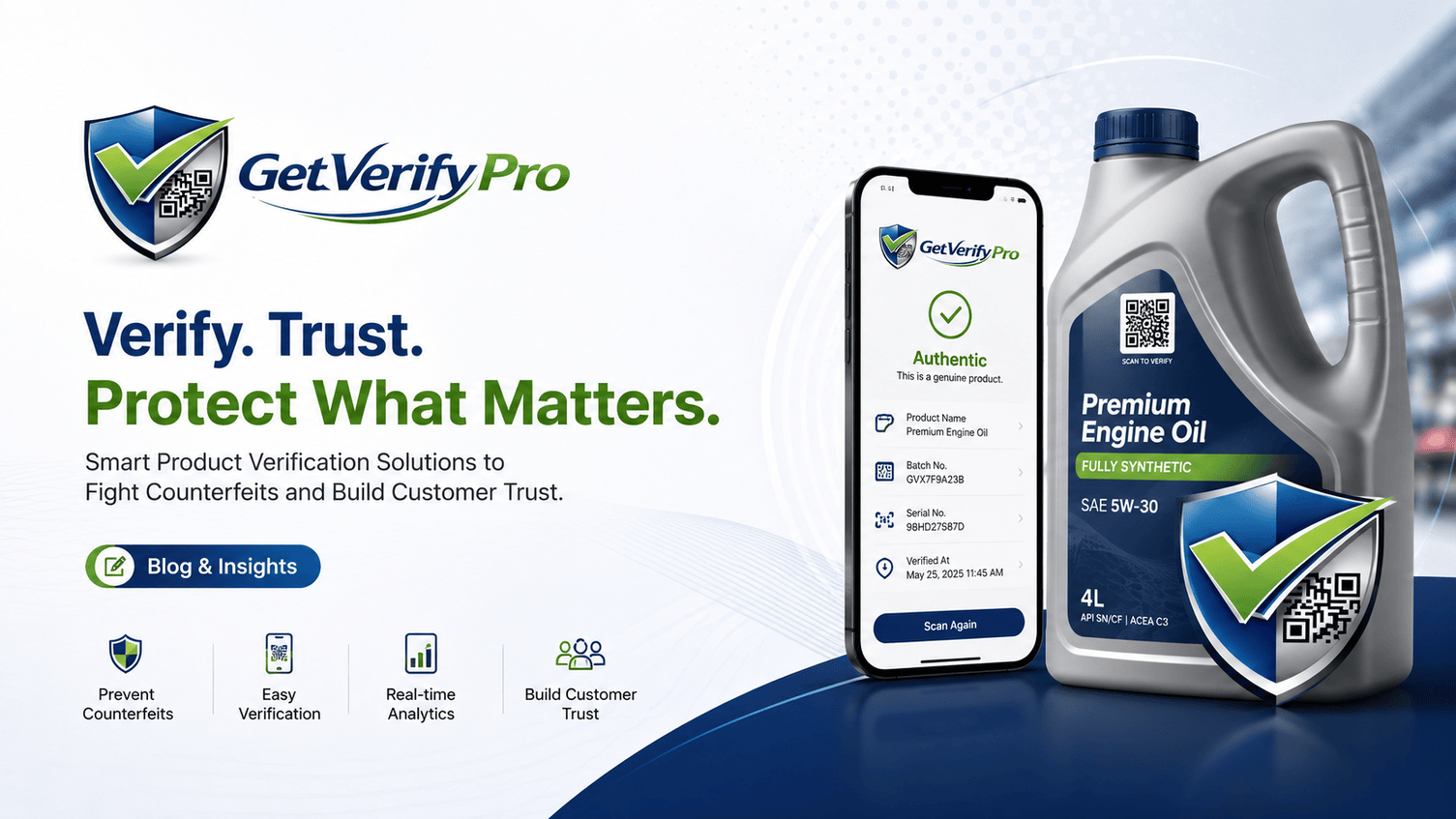
Every year, thousands of vehicle owners in Bangladesh unknowingly pour counterfeit engine oil into their bikes, cars, and trucks. The bottle looks right. The seal looks right. The price is even slightly cheaper — which feels like a win, until the engine starts making noises six months later that it never used to make.
This is one of the most common and most expensive problems in Bangladesh's automotive and lubricant market. If you're a consumer, it costs you engine health and money. If you're a brand, it costs you customer trust, revenue, and years of reputation built one satisfied customer at a time.
In this guide, we'll cover exactly how to check original engine oil in Bangladesh, the warning signs of fake engine oil, why this problem keeps growing, and how modern verification technology is finally giving both consumers and brands a real solution.
Visit GetVerifyPro Website: www.getverifypro.com
Visit Appnexaa Website For Product Details: www.appnexaa.com
Bangladesh's motorcycle and automotive market has grown fast — and counterfeiters have grown right along with it. Popular, trusted brands are the most frequently copied, simply because their reputation already does the selling for the fake product. Counterfeiters don't need to build trust; they borrow it from someone else's label.
A few things make this problem worse in Bangladesh specifically:
The result is a market where genuine brands lose sales to their own counterfeit copies, and consumers absorb the real cost through engine damage, voided warranties, and repeated repairs.
Before we talk about technology-based verification, here are practical, physical checks anyone can do at the point of purchase.
Genuine engine oil bottles use tamper-proof seals that are difficult to replicate cleanly. Look for uneven glue marks, a seal that feels loose, or a cap that spins slightly before it clicks — all common signs of a container that has been opened and refilled.
Original brands invest heavily in packaging. Fake products often have:
Pour a small amount onto a white surface if possible. Genuine engine oil usually has a consistent color and viscosity for its grade. Fake oil often looks thinner, cloudier, or has visible sediment.
Genuine engine oil has a specific, consistent smell. A strong chemical or burnt odor is often a sign of low-grade or reused oil repackaged as a premium brand.
If a bottle is significantly cheaper than the market-standard price for that brand and grade, that's not a discount — it's a red flag. Genuine distributors rarely undercut their own pricing by a wide margin.
This sounds obvious, but it's the single biggest factor. Authorized dealers and workshops have accountability; roadside or unofficial sellers usually don't.
These checks help — but they all rely on human judgment, and counterfeiters get better at copying packaging every year. This is exactly why physical inspection alone isn't enough anymore, for either the buyer or the brand.
Visit GetVerifyPro Website: www.getverifypro.com
Visit Appnexaa Website For Product Details: www.appnexaa.com
Here's the uncomfortable truth: even experienced mechanics and long-time customers get fooled by well-made counterfeits. As fake packaging gets more sophisticated, visual and physical checks become less reliable every year.
What consumers actually need is a way to get a definite, instant answer — not an educated guess based on how the cap feels. And what brands need is a way to make that certainty available to every single customer, at every single point of sale, without depending on how sharp-eyed the buyer happens to be.
This is the gap that product authentication technology is built to close.
Modern product authentication systems — like the one used across engine oil, lubricant, and spare parts brands in Bangladesh — work by giving every single bottle a unique, one-time verification code. Here's how it plays out for a real customer:
For areas with weak or no internet access — which still describes a large part of Bangladesh outside major cities — an SMS-based verification option lets customers send a code by text message and receive an instant authenticity confirmation, no data connection required.
This is precisely the system GetVerifyPro provides to brands: QR code verification, scratch code verification, and SMS verification, all working together so that no customer is ever left without a way to check what they're buying.
For lubricant and engine oil brands specifically, the cost of staying with "trust-based" packaging alone tends to show up in ways that are easy to underestimate until they've already happened:
These aren't hypothetical risks. They're the exact problems that brands like AISIN Bangladesh — one of the country's most recognized engine oil brands — were facing before implementing product verification. Their own words:
"With GetVerifyPro, we've ensured that our customers can easily verify the originality of AISIN products. The QR code system has not only safeguarded our brand but also significantly improved customer confidence and sales."
That's not a hypothetical outcome. That's a real brand, in the exact same industry, describing the exact same problem this article is about — and what changed after they solved it.
It's easy to think of authentication technology as an added cost. In practice, for engine oil and lubricant brands, it functions closer to insurance combined with a growth tool:
The brands that treat verification as core infrastructure — not an optional add-on — are the ones building long-term trust in a market where trust is genuinely hard to earn back once lost.
Visit GetVerifyPro Website: www.getverifypro.com
Visit Appnexaa Website For Product Details: www.appnexaa.com
GetVerifyPro is a complete product authentication platform built specifically for brands in markets like Bangladesh, where counterfeiting is a daily business risk. For engine oil and lubricant brands, this means:
If your brand is selling engine oil, lubricants, or any product where counterfeiting is cutting into your sales and your customers' trust, this is exactly the kind of protection worth putting in place before the problem grows any larger.
Visit GetVerifyPro Website: www.getverifypro.com
Visit Appnexaa Website For Product Details: www.appnexaa.com
How can I check if my engine oil is original in Bangladesh? Check the seal, print quality, oil color and smell, and buy only from authorized sellers. For a definite answer, look for a QR code, scratch code, or SMS verification option on the bottle — this gives you an instant, specific confirmation rather than a guess.
What should I do if I think I bought fake engine oil? Stop using it, keep the packaging and any verification codes, and contact the brand directly. If the product has a QR or scratch code, scanning it will usually tell you immediately whether it's genuine.
Can fake engine oil damage my engine? Yes. Fake or low-grade oil often lacks the correct viscosity and additives for your engine, leading to increased wear, overheating, and reduced engine lifespan over time.
How does QR code verification prevent counterfeit engine oil? Each bottle receives a unique, one-time code. Once verified by a customer, that same code cannot be reused elsewhere — so a duplicated or copied bottle will fail verification instantly.
Is SMS verification available for engine oil brands without internet in the area? Yes. Systems like GetVerifyPro support SMS-based verification, letting customers confirm authenticity by text message even without a data connection.
Visit GetVerifyPro Website: www.getverifypro.com
Visit Appnexaa Website For Product Details: www.appnexaa.com
Want to protect your engine oil or lubricant brand from counterfeiting? Contact GetVerifyPro to see how QR, scratch code, and SMS verification can be set up for your product line.
Complete Overview: How to Identify Fake Products in Bangladesh: The Complete Guide (2026) – A comprehensive guide on identifying fake goods across retail, FMCG, and consumer categories.
Auto Parts & Safety: 7 Ways to Spot Fake Auto Spare Parts in Bangladesh (2026) – Key indicators for verifying genuine vehicle spare parts and components.
Pharmaceuticals & Healthcare: How to Check Fake Medicine in BD (2026 Guide) – Critical verification methods to ensure prescription drugs and health supplements are genuine.
Cosmetics & Skincare: How to Stop Fake Cosmetics Duplicate in Bangladesh (2026 Guide) – How beauty importers and skincare brands eliminate replica products and toxic fakes.
Offline Security Technology: How to Verify Products Without Internet: SMS Verification Guide – Fast product authentication via scratch-off SMS codes for rural and offline users.