
Counterfeit medicine is one of the most dangerous forms of product fraud — and one of the hardest for an ordinary buyer to catch. Unlike a fake spare part or a diluted bottle of oil, a fake medicine doesn't just fail to work. It can actively harm the person taking it, delay real treatment, and in serious cases, put lives at risk.
In Bangladesh's fast-growing pharmaceutical market, this is not a rare or isolated problem. Counterfeit and substandard medicines circulate through unregulated pharmacies, informal sellers, and even some formal retail channels, often packaged well enough that patients and pharmacy staff have no easy way to tell the difference.
This guide covers how to check if medicine is original in Bangladesh, the warning signs to look for, why this problem is so hard to solve with manual checks alone, and how pharmaceutical brands are now using verification technology to protect both patients and their own reputation.
A few factors make this issue particularly difficult in the local market:
The consequence isn't just financial loss for the brand — it's a direct risk to patient health and safety, which makes this a far more urgent problem than counterfeiting in most other product categories.
Visit GetVerifyPro Website: www.getverifypro.com
Visit Appnexaa Website For Product Details: www.appnexaa.com
While no manual check can replace verified authentication, there are useful warning signs worth knowing before and after a purchase.
Genuine pharmaceutical packaging is produced under strict quality control. Watch for:
A tampered or resealed package, a strip that looks like it's been re-glued, or a blister pack with uneven foil are all signs the packaging may have been altered after leaving the factory.
Look for dates that are smudged, altered, or inconsistent with the batch number format the brand normally uses. Expired medicine repackaged with a new date is a known counterfeiting method.
Tablets or capsules that differ in color, size, texture, or smell from what you've received before from the same brand are a warning sign worth raising with the pharmacist.
A price noticeably below the standard market rate for a specific brand is one of the most common red flags associated with counterfeit medicine.
Purchasing from registered, licensed pharmacies significantly reduces — though doesn't fully eliminate — the risk of receiving counterfeit stock, since these outlets are accountable for their supply chain.
If you ever have concerns about a specific medicine you've purchased, the safest step is always to consult a pharmacist or your doctor rather than relying on visual inspection alone.
Packaging-based counterfeiting has become sophisticated enough that even trained pharmacy staff can be deceived by a well-made fake. Unlike other product categories, the margin for error with medicine is effectively zero — a missed fake isn't a wasted purchase, it's a health risk.
This is exactly why pharmaceutical brands cannot rely on packaging quality alone as their line of defense. Patients and pharmacies need a way to get a certain, verifiable answer at the point of sale — not a judgment call based on how a blister pack looks.
Modern product authentication technology gives every unit of medicine — a box, a strip, or a bottle — a unique, one-time verification code. In practice, this means:
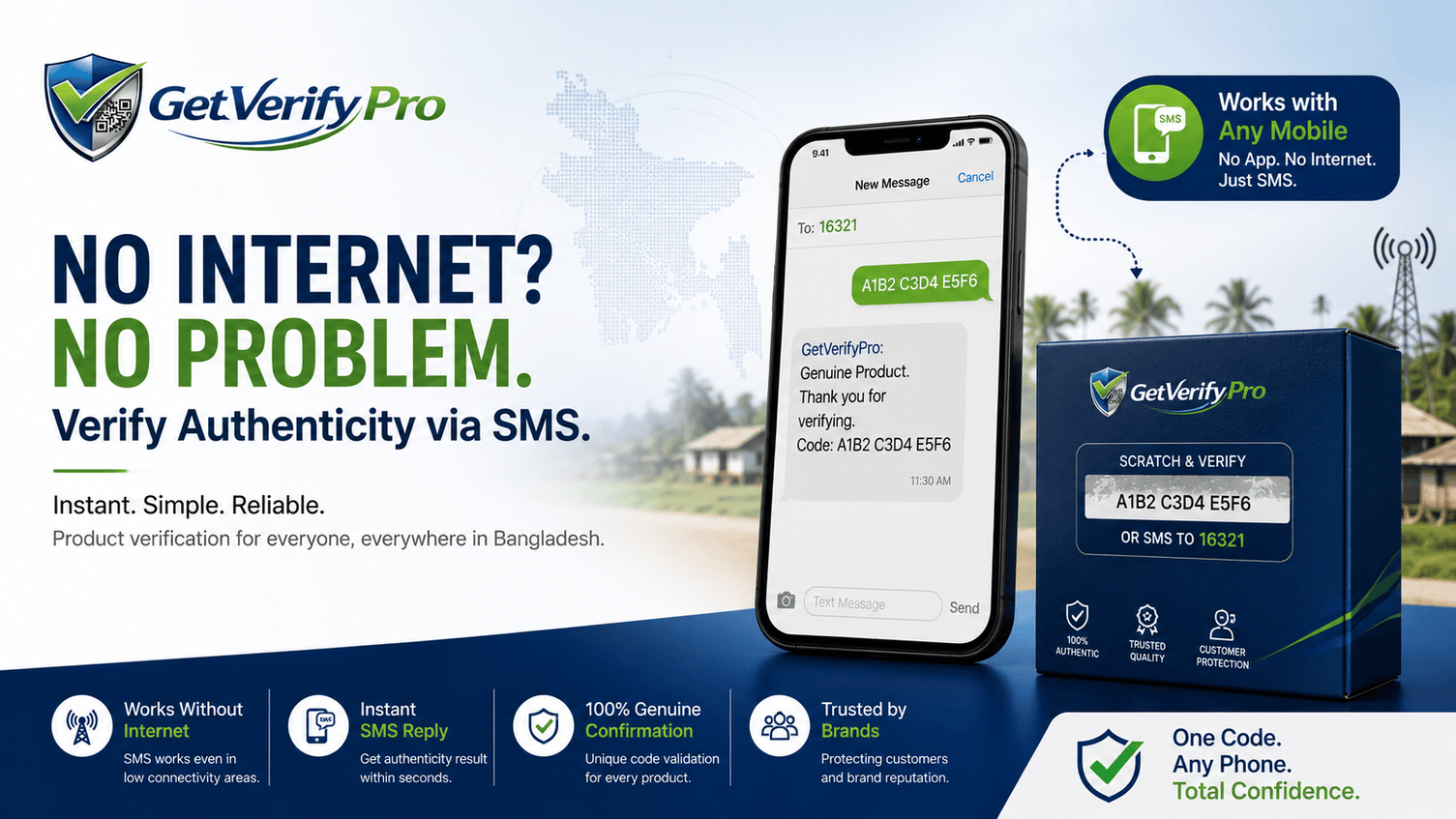
For areas with limited or no internet access, SMS-based verification allows a patient or pharmacist to text a code and receive an instant authenticity confirmation — a critical option in a country where reliable internet access isn't guaranteed everywhere medicine is sold.
This is the core of what GetVerifyPro provides to pharmaceutical brands: QR code, scratch code, and SMS verification working together, so no patient is ever left without a way to confirm what they're about to take.
Visit GetVerifyPro Website: www.getverifypro.com
Visit Appnexaa Website For Product Details: www.appnexaa.com
For medicine manufacturers and distributors, the risks of relying on packaging alone go well beyond typical counterfeit losses:
These are the exact categories of risk that led other Bangladeshi brands — including automotive and lubricant brands like AISIN Bangladesh — to adopt verification systems after realizing that reputation alone was no longer enough protection:
"The QR code system has not only safeguarded our brand but also significantly improved customer confidence and sales."
For a pharmaceutical brand, the stakes behind that same statement are even higher — because what's on the line isn't just customer confidence, but patient safety.
For medicine manufacturers, product authentication isn't an optional marketing feature — it functions as core infrastructure for both compliance and trust:
For any brand operating in healthcare, this is one investment where the cost of not acting is measured in more than lost revenue.
Visit GetVerifyPro Website: www.getverifypro.com
Visit Appnexaa Website For Product Details: www.appnexaa.com
GetVerifyPro provides a complete authentication system built for markets like Bangladesh, where counterfeit medicine remains a serious and ongoing risk. For pharmaceutical brands, this includes:
If your brand manufactures or distributes medicine in Bangladesh, a verifiable authentication system is one of the most direct ways to protect patients, defend your reputation, and demonstrate accountability to regulators and healthcare partners alike.
How can I check if my medicine is original in Bangladesh? Check the packaging print quality, seal condition, and expiry date formatting, and buy only from licensed pharmacies. For a definite answer, look for a QR code, scratch code, or SMS verification option, which confirms authenticity instantly rather than relying on visual inspection.
What should I do if I suspect I bought fake medicine? Do not take it. Keep the packaging and any verification codes, and consult a pharmacist or doctor immediately. Report the concern to the pharmacy and, where possible, to the brand directly.
Why is counterfeit medicine more dangerous than other fake products? Because it directly affects a patient's health. A fake medicine may contain the wrong ingredients, incorrect dosages, or no active ingredient at all, which can delay proper treatment or cause direct harm.
How does QR code verification help prevent counterfeit medicine? Each unit receives a unique, one-time code. Once a code has been verified, it cannot be validly reused on another package, so a duplicated or repackaged product will fail verification immediately.
Is SMS-based verification useful for medicine sold in rural areas? Yes. SMS verification allows patients and pharmacists to confirm authenticity by text message, which is especially important in regions where reliable internet access is not guaranteed.
Want to protect your pharmaceutical brand and your patients from counterfeit medicine? Contact GetVerifyPro to see how QR, scratch code, and SMS verification can be implemented for your product line.
Visit GetVerifyPro Website: www.getverifypro.com
Visit Appnexaa Website For Product Details: www.appnexaa.com
Complete Overview: How to Identify Fake Products in Bangladesh: The Complete Guide (2026) – A comprehensive guide on identifying fake goods across retail, FMCG, and consumer categories.
Automotive & Lubricants: How to Spot Fake Engine Oil in Bangladesh (2026) – Protect your vehicle engine from substandard and recycled counterfeit oils.
Auto Parts & Safety: 7 Ways to Spot Fake Auto Spare Parts in Bangladesh (2026) – Key indicators for verifying genuine vehicle spare parts and components.
Cosmetics & Skincare: How to Stop Fake Cosmetics Duplicate in Bangladesh (2026 Guide) – How beauty importers and skincare brands eliminate replica products and toxic fakes.
Offline Security Technology: How to Verify Products Without Internet: SMS Verification Guide – Fast product authentication via scratch-off SMS codes for rural and offline users.